

Why People Defend Harmful Systems
From the outside, it can be difficult to understand. Someone begins to see contradictions. They experience harm. They watch other people get hurt. Evidence begins to challenge what they have been taught. And yet, they still defend the system.
Why?
It is easy to assume they are refusing to see the truth. But belief is rarely just about information. Once a belief becomes deeply connected to identity, relationships, belonging, purpose, and safety, questioning it can feel like threatening an entire life.
They Are Defending More Than a Belief
Imagine discovering that something you built much of your life around might not be what you believed it was. Accepting that possibility may mean confronting lost years, broken trust, damaged relationships, sacrifices made, opportunities missed, or decisions that cannot be undone.
It may also mean risking relationships with people you still love. That is an enormous emotional cost. So when someone defends a harmful system, they may not simply be defending its teachings. They may be defending their community, their memories, their identity, their choices, and the meaning they have built around their life.
Sometimes they are defending themselves from what accepting the truth would require them to face.
The Good Was Real Too
This becomes even more complicated because harmful systems are rarely experienced as harmful every moment. There may have been genuine friendships. Laughter. Support. Purpose. Traditions. Accomplishments. Moments when someone felt deeply loved or understood. Those experiences were real.
Recognizing harmful patterns does not suddenly make every good memory false. This is one reason leaving can create so much confusion. A person may think, How could this have harmed me when so much of it felt good?
But those two realities do not cancel each other out. Something can give you meaningful experiences and still contain harmful patterns. You can love people within a system and question the system itself. You can be grateful for parts of your experience and grieve what it cost you. Both can be true.
When Belief Becomes a Taproot
This is where the Taproot Belief Structure becomes important. A deeply rooted belief does not exist alone. It becomes connected to other beliefs, fears, relationships, and behaviors that reinforce it.
If someone has internalized the message “This is the only place where I truly belong,” questioning the system is no longer simply an intellectual exercise. The question becomes emotional.
What happens to me if this isn’t true?
Will I lose my community?
Will people I love reject me?
Who will I be without this identity?
What if everything I sacrificed was for nothing?
The fear surrounding the belief can become just as powerful as the belief itself.
Why Facts Are Sometimes Not Enough
This also helps explain why presenting someone with evidence does not always change their mind. We often assume that if people are shown enough facts, they will naturally reconsider what they believe. But facts are competing with much more than ideas. They may be competing with belonging, identity, loyalty, fear, relationships, memories, and years of emotional investment.
If accepting new information threatens all of those things at once, rejecting the information may feel safer than accepting it. That does not mean people are incapable of thinking critically. It means human beings are emotional as well as rational.
Freedom Can Feel Like Loss Before It Feels Like Freedom
Leaving a high-control environment can create an emotional emptiness people rarely talk about. Suddenly, nobody is telling you who to be, what to believe, what your purpose is, or which choices are acceptable.
That freedom may eventually become empowering.
At first, it can be terrifying. Certainty disappears. Familiar relationships may change. Old answers no longer work, while new ones have not yet formed. A person may even feel tempted to return to the system simply because certainty feels safer than uncertainty.
This is why leaving is not always one dramatic moment of realization. Sometimes it is a long process of questioning, grieving, rebuilding, and learning to trust yourself again.
Understanding Instead of Judging
When we understand these dynamics, the question changes. Instead of asking, “Why can’t they see it?” we can ask, “What would seeing it cost them?” That question creates room for compassion.
People do not necessarily remain loyal because they are weak, unintelligent, or incapable of recognizing harm. Sometimes loyalty has become connected to the things human beings need most: love, belonging, identity, meaning, and safety.
Breaking that connection takes more than information. It takes the emotional freedom to question without losing yourself. And sometimes the first step is simply realizing that questioning is allowed.
The ideas explored here are developed further in Creda: Breaking Free from the Loyalty Trap.
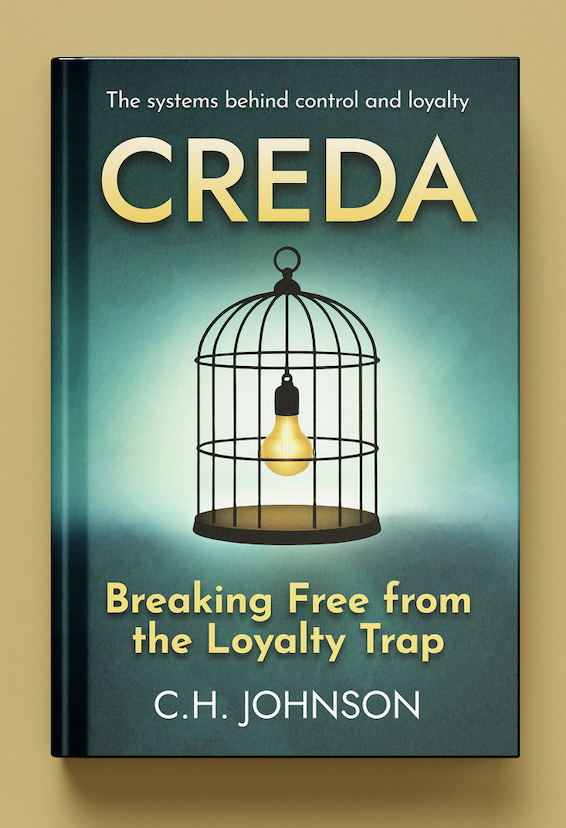
About the Author: C.H. Johnson writes about belief, loyalty, identity, and the systems that shape human behavior. She is the author of Creda: Breaking Free from the Loyalty Trap.
Enjoyed this article? Share it with someone who may find it helpful.